
A lower gas fee can be a false economy. In a typical DeFi transaction, the fee is only the visible price of execution; the larger risk may be signing an approval that remains active, interacting with the wrong contract, or submitting a transaction whose economic outcome has changed before it is confirmed. This is the counterintuitive point: gas optimization and security are not separate housekeeping tasks. They are connected decisions about what the wallet is asking the blockchain to do, when it is doing it, and how much uncertainty the user accepts.
Consider a US-based user moving funds into a decentralized exchange during a volatile market. The user checks the gas estimate, sees a high fee, and chooses the fastest available setting. A moment later, the transaction succeeds, but the token received is worth less than expected because the price moved and the trade carried substantial slippage. Alternatively, the user saves gas by approving a broad spending allowance first, then forgets that the approval can be used later. The fee was optimized. The position was not.
Gas Is a Resource Constraint, Not a Security Score
On Ethereum-compatible networks, gas measures the computational work required to execute an operation. The total fee is broadly determined by the amount of gas used and the price paid per unit of gas. A simple transfer generally requires less computation than a swap, liquidity provision, lending action, or multi-step contract call. Yet a cheaper transaction is not automatically better designed. A failed transaction still consumes gas, and a successful transaction can still produce a poor or dangerous result.
The most useful mental model is to treat every DeFi action as a three-part decision. First, identify the state change: what balance, allowance, debt, liquidity position, or ownership record will change? Second, identify the uncertainty: could the price, available liquidity, contract state, or network conditions change before execution? Third, identify the irreversibility: if the transaction is wrong, can the effect be undone, or would recovery require another transaction, negotiation, or luck?
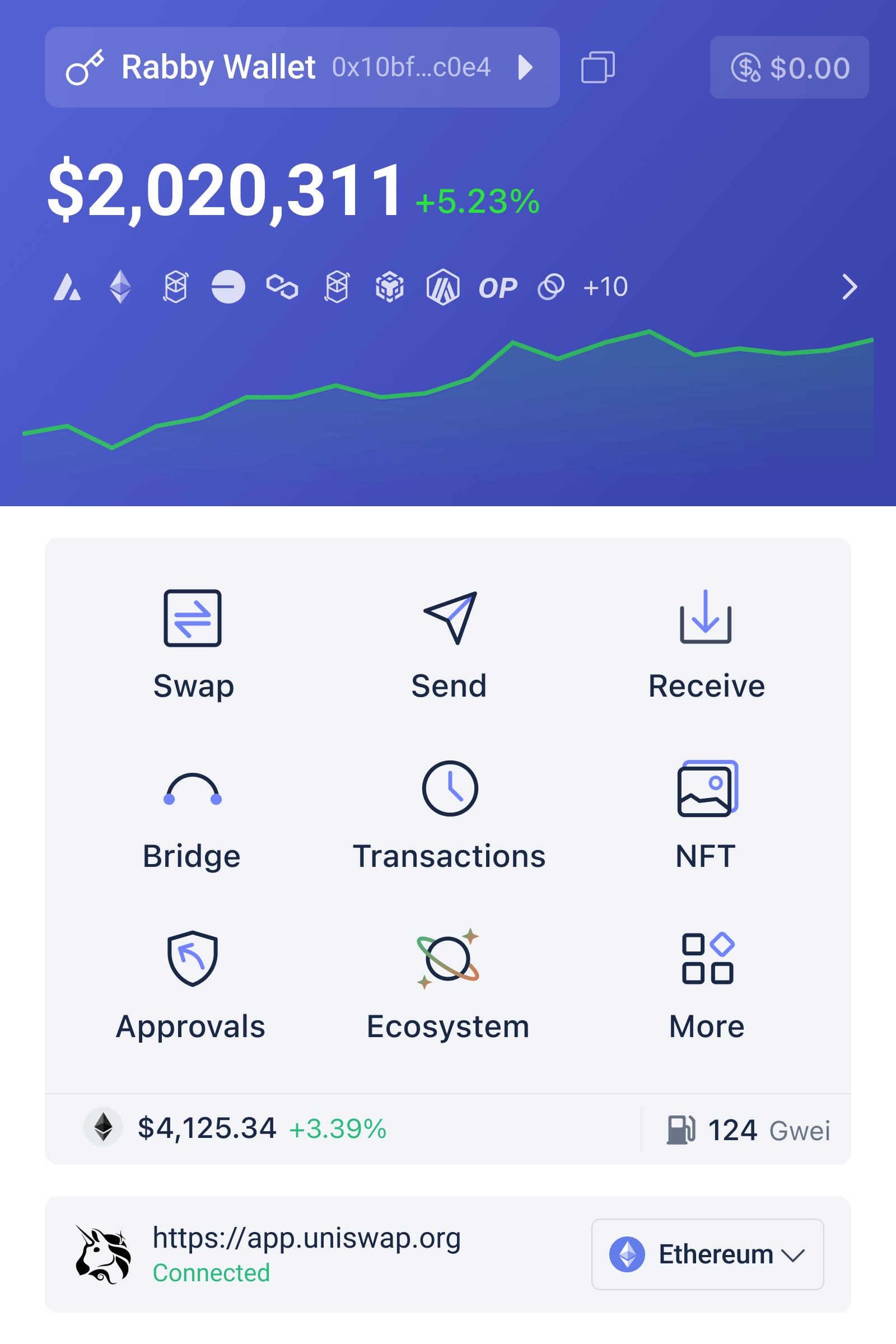
This framework explains why a wallet extension matters. A browser wallet is not merely a password interface or a button that broadcasts signed data. It is the point at which a human-readable intention is translated into a contract call. A useful wallet experience should help the user distinguish the network, the target contract, the assets involved, and the permissions being granted. Users considering a rabby extension download should obtain it from a trustworthy source, install it in a supported browser, and verify that the extension and the connected website are the intended ones before importing or creating an account.
Installation itself is part of the security boundary. A counterfeit extension can imitate familiar branding while capturing a seed phrase or redirecting transactions. The same principle applies after installation: a wallet can display warnings and transaction information, but it cannot make a malicious website trustworthy or reverse a transaction that has already been confirmed. The user must still protect the recovery phrase, reject unsolicited requests, and treat unexpected token approvals as a serious event.
A Case Study: The “Cheap” Swap
Imagine that a user wants to exchange one token for another. The decentralized exchange first requests an approval, allowing a contract to spend the input token. The user then signs the swap itself. From the interface, this may look like one simple action. At the protocol level, it can be two separate state changes: one grants permission, and the other moves assets according to the swap parameters.
Suppose the user tries to minimize gas by choosing a low fee during a congested period. The approval may remain pending, while the market moves. If the swap later executes with a broad allowance and a weak minimum-output setting, the user may receive significantly less than intended. The low gas setting did not cause the price movement, but it increased the time during which the user’s assumptions could become stale. Gas price, execution speed, slippage, and approval scope interact.
There is also a less obvious failure mode: a transaction can be technically valid but economically irrational. A user may spend $25 in network fees to move or swap an asset worth only slightly more than that amount. In this case, gas optimization requires more than selecting a cheaper priority level. It requires comparing the expected benefit of the action with the fee, the price impact, and the risk of leaving an approval or position open.
Transaction simulation and pre-signing analysis can improve this decision by estimating the resulting balance changes and identifying suspicious or unusual behavior. Such tools are valuable because raw transaction data is difficult for most people to interpret. However, simulation is not an oracle. It reflects an assumed state and may not capture every external dependency, reentrancy path, oracle change, front-running condition, or later action by an attacker. A simulation should be treated as evidence about a proposed transaction, not as a guarantee of safety.
Three Ways to Optimize Gas, and What Each Sacrifices
Wait for a quieter period
The simplest approach is timing. When demand for block space falls, the market price of gas may also fall. Waiting can be sensible for non-urgent actions such as consolidating small balances, claiming a reward, or adjusting a long-term liquidity position. Its cost is opportunity and execution risk. A favorable fee may disappear, while the asset price or protocol state changes. Waiting is therefore most appropriate when the transaction is not time-sensitive and the user has checked whether delay creates exposure.
Use a different network or scaling environment
Many DeFi users choose a lower-cost Ethereum-compatible network for routine activity. This can reduce fees and make smaller transactions practical. The trade-off is that security assumptions, liquidity depth, bridge design, validator or sequencer dependencies, and application quality may differ. A lower fee does not mean the same risk profile. Moving assets between networks can introduce an additional bridge transaction and a new trust boundary, sometimes eliminating much of the expected saving.
The practical question is not “Which chain is cheapest?” but “Where is the required liquidity and security for this particular action?” A low-fee network may be efficient for a well-supported stablecoin transfer, yet less suitable for a large swap with thin liquidity. Users should also confirm that the wallet is connected to the intended network before signing. Network confusion is a basic error with potentially expensive consequences.
Batch or combine actions where the protocol supports it
Some applications can combine several operations into one contract call, reducing repeated transaction overhead. For example, a position-management workflow may package multiple state changes into a single execution. This can be efficient, but composability adds complexity. One failed internal step may cause the entire operation to revert, and the user may find it harder to identify which component created the risk. A single signature can also authorize a more complicated action than the interface makes obvious.
Batching is therefore a trade between execution efficiency and interpretability. It is most attractive when the application is well understood, the expected state changes are clear, and the wallet can present the combined result in a readable way. It is less attractive when the user is experimenting with an unfamiliar protocol or when the transaction includes unrelated actions that would be better reviewed separately.
Approvals Are Often the Hidden Security Variable
Token approvals deserve special attention because they change what a contract may do later. An approval is not the same as sending tokens immediately; it grants permission for a designated spender to transfer an amount under specified rules. Some users approve a very large amount to avoid repeating the approval transaction and saving future gas. This may reduce friction, but it enlarges the potential loss if the spender contract is compromised, incorrectly designed, or not the contract the user intended to trust.
A smaller approval can limit damage, but it may require another transaction and another fee. Revoke tools can remove permissions later, although revoking itself costs gas and does not undo transfers that already occurred. The decision is consequently not “maximum approval versus perfect safety.” It is a choice between convenience, future transaction cost, contract trust, and exposure duration.
A practical rule is to review approvals as carefully as swaps. Ask which contract is receiving permission, which token is affected, whether the amount is necessary, and whether the permission remains useful after the immediate action. A wallet warning is more useful when the user understands the underlying mechanism. Conversely, repeatedly clicking through warnings without reading them trains the user to ignore the very signals that matter.
How a Wallet Extension Fits Into the Workflow
A browser extension such as Rabby can serve as a decision checkpoint between a DeFi website and the blockchain. Before signing, the user should inspect the selected account, network, contract or recipient, token amounts, approvals, and expected outcome. When available, transaction previews and risk indicators can make differences visible that a decentralized application’s interface may compress or omit.
That role has limits. The extension does not custody away the need for judgment, and no interface can eliminate smart-contract risk, oracle failure, economic attacks, phishing, or user error. A warning can be incomplete; a clean-looking transaction can still have an unfavorable economic outcome. Wallet security is best understood as layered defense: secure installation, protected keys, careful website selection, least-privilege approvals, transaction review, and post-transaction monitoring.
For everyday US users, the most useful habit is to separate urgency from importance. If an action is urgent, review slippage, deadline, fee, and destination before increasing the priority fee. If it is important but not urgent, wait for a suitable network condition, compare the total cost, and consider whether the transaction can be simplified. If the amount is large, test the workflow with a small amount first when the protocol and asset make that practical.
What to Watch Next
Gas optimization will likely become less about manually guessing fee settings and more about selecting execution routes under several constraints: cost, latency, liquidity, privacy, and security. That shift could improve usability if wallets explain why a route is recommended rather than presenting an opaque “best” choice. It could also create a new risk if users delegate too much judgment to automated routing systems without understanding their assumptions.
Because no recent project-specific weekly update is available for the current reporting period, the durable lesson is more useful than a news-driven claim: wallet features should be evaluated by the quality of the decision they help the user make. The important signal is not whether a tool promises to eliminate risk, but whether it makes permissions, network context, simulation limits, and expected state changes easier to inspect.
The reusable heuristic is simple: optimize the transaction’s total risk-adjusted cost, not its gas line alone. Include the fee, the cost of delay, the probability and scale of an unfavorable execution, the duration of any approval, and the difficulty of recovery. In some cases, paying more for a clearer and faster transaction is rational. In others, waiting or moving to a suitable lower-cost environment is the better choice. The correct answer depends on the action and its reversibility.
Frequently Asked Questions
Does a lower gas fee make a DeFi transaction safer?
No. A lower fee may reduce financial cost, but it can also increase confirmation time or make a transaction more likely to remain pending. Safety depends on the contract, network, permissions, parameters, and expected result. Gas efficiency should be assessed alongside slippage, urgency, and reversibility.
Should I approve the maximum token amount to save gas?
Not by default. A large or unlimited approval can avoid a future approval transaction, but it gives the spender broader authority if the contract or website is compromised. A smaller approval may cost more over time while reducing exposure. Use the narrowest permission that fits the intended action unless there is a clear, understood reason to do otherwise.
Can a wallet extension guarantee that a transaction is safe?
No. A wallet can improve visibility through transaction details, warnings, and previews, but it cannot guarantee the behavior of an external smart contract or protect a recovery phrase that has been disclosed. Treat wallet analysis as a powerful review aid within a broader security process, not as a substitute for verifying the website, contract, network, and transaction intent.